Have you ever noticed that one part of you adores your child, while another part feels exhausted or resentful? Or that part of you loves bedtime stories, while another part is quietly wishing they would just go to sleep so you can finally rest? If so, you’re not alone — and there is nothing wrong …

Have you ever noticed that one part of you adores your child, while another part feels exhausted or resentful?
Or that part of you loves bedtime stories, while another part is quietly wishing they would just go to sleep so you can finally rest?
If so, you’re not alone — and there is nothing wrong with you.
We all have different “parts” inside us, and each one has good intentions. In the therapy model Internal Family Systems (IFS), we learn how to get to know these parts with curiosity and compassion rather than judgement.
When we become parents — whether through birth, fostering, or adoption — new parts of us come online. Suddenly we’re responsible for another human being, and that can bring a whirlwind of emotions we never expected.
Our anxious parts, our self-critical parts, our worrying parts — they are all trying to protect us and our children. But when we’re exhausted, overwhelmed, unsupported, or stretched too thin, those parts can become heavy and loud.
So how do your parts react when your child’s behaviour is triggering?
Do they rush to defend you with anger and a desire to punish?
Do they collapse and want to hide or distract from the hurt?
Try getting curious about the ways you are triggered by your child’s behaviour. Then try doing a “You Turn”. This is when we attend to our own triggered parts before we attempt to respond to our child’s triggered parts.
It’s helpful to practise this on your own, or with a friend, first.
Imagine your child’s behaviour. Then notice the part that leaps to your defence or tries to deal with or fix the behaviour. Bring it some curiosity.
How did it learn to talk like that?
How is it trying to help?
How old is this part?
To our surprise, we might find that the part of us trying to control our child’s behaviour is not much older than a child itself, and hasn’t yet met the “you” that is not a part.
These parts are often very tired and overwhelmed. Bringing them your compassion and appreciation for the incredible work they are doing can be deeply soothing.
You might journal about how they are feeling and recognise that this isn’t all of you — this is a part of you.
Next time your part is triggered by your child’s behaviour, it might trust you a little more. Rather than leaping into its usual protective strategies, it may soften and relax. You might remember to pause, take a breath, and send it some compassion.
Once you sense some relaxation, it becomes easier to respond to the situation from what IFS calls the Self.
We know we are in Self energy because our responses tend to be characterised by the 8 Cs:
- Curiosity
- Calm
- Connection
- Compassion
- Courage
- Confidence
- Creativity
- Clarity
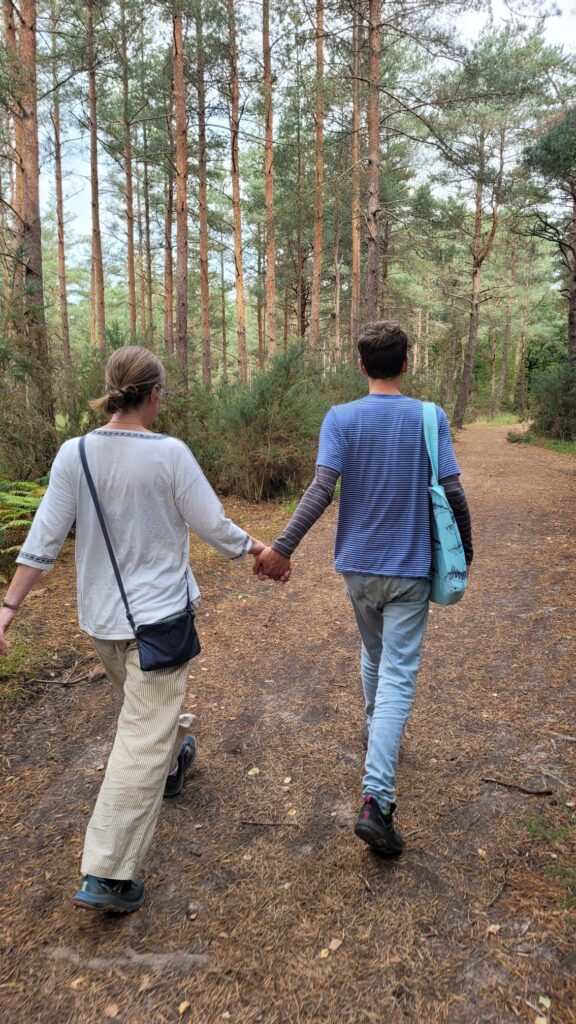
For example, I remember last January when the temperatures were below zero and my teen announced he was “just off camping”.
My initial reaction — which I registered in a millisecond — was a Molotov cocktail of panic and alarm. But once that reaction was acknowledged, I noticed I felt curious instead.
“Ah, where are you planning on camping?” (He didn’t know yet.)
“Do you have a sleeping bag?” (Yes, but it was a summer one.)
“Do you think you’ll get enough time in the morning to have breakfast before college?” (Err… no.)
Gradually, the curiosity and connection — without trying to solve the problem — slowed the moment down enough for my son to rethink the plan himself. So often, we are lending our prefrontal cortex to our children, but in a way that gently models how they can begin to access their own planning and thinking-ahead parts (as in my son’s example). We simply can’t do that when we are deep in the red zone of our own fight, flight, or freeze responses.
Over time, the “You Turn” becomes a habit — a way of life that guides our guiding and supports our supporting.
If you would like to learn more about this therapy, you can contact Carolyn Baynes on 07946 153 054 or email info@carolynbaynes.co.uk.
Carolyn works therapeutically with adults and children in Farnham and online.
Chinese Proverb: No family can hang out the sign, "Nothing the matter here!"
Book a Consultation
It’s easy and free!
Carolyn Baynes
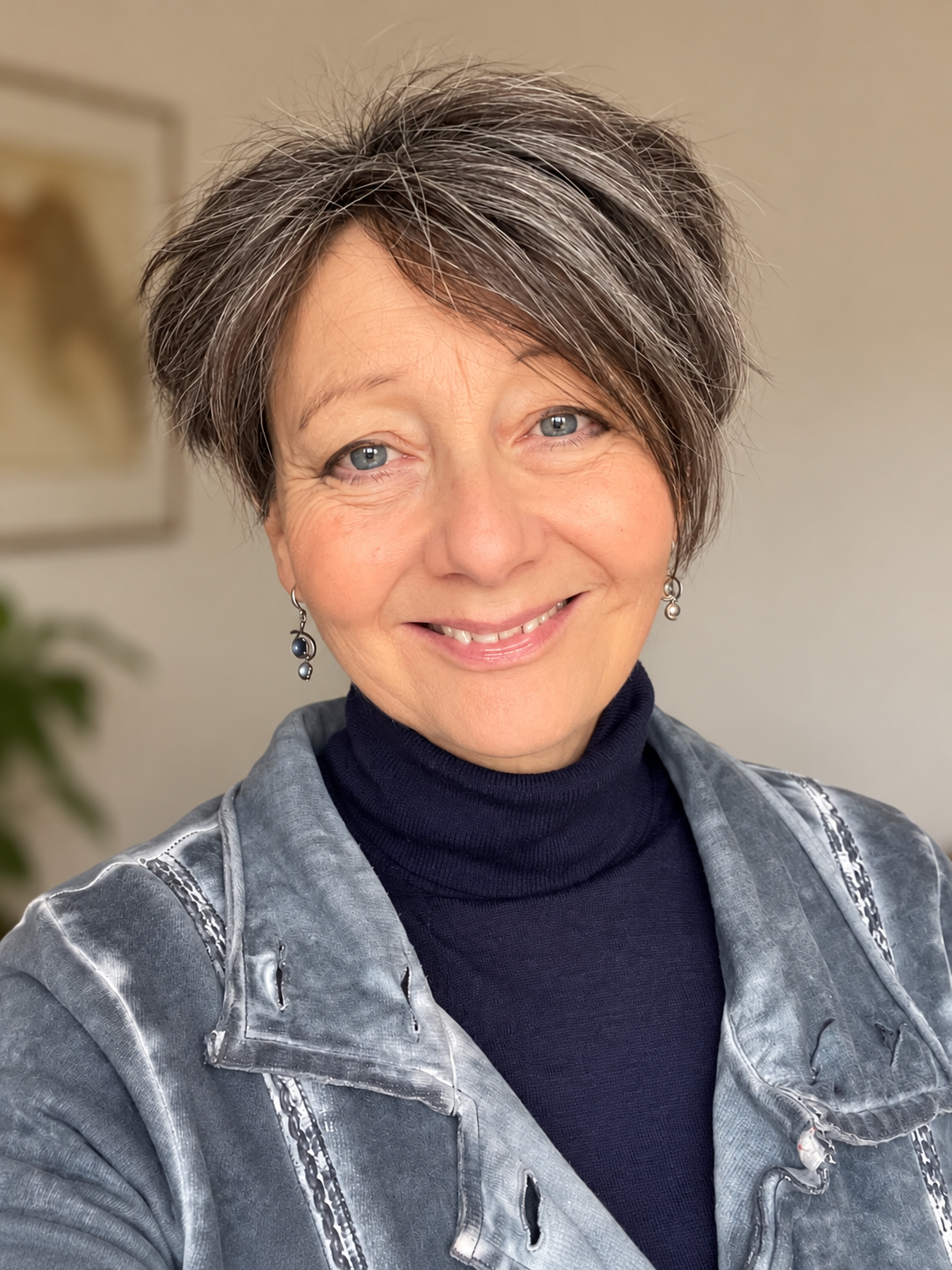
Carolyn Baynes is an Internal Family Systems (IFS) therapist based in Farnham, Surrey. Drawing on her experience in education, mindfulness and therapeutic practice, she offers compassionate support to parents, adults and young people, helping them understand their inner responses and find greater connection with themselves and others.