
If you prefer to listen to this blog to help with the reflections you can do that here: Listen Here When a part of us turns to food, or the denial of food, to help us manage difficult emotions, our relationship with eating can become complicated and sometimes deeply distressing. I'm using the term disordered eating here …


If you prefer to listen to this blog to help with the reflections you can do that here:
When a part of us turns to food, or the denial of food, to help us manage difficult emotions, our relationship with eating can become complicated and sometimes deeply distressing.
I’m using the term disordered eating here not as a clinical diagnosis, but to describe a relationship with food that has become troubled, restrictive, compulsive or preoccupying. It might show up in the ways we use food for comfort, the rules we create around eating, or the battles we have with ourselves about what, when or how much we eat.
These patterns can keep us trapped and preoccupied for years, sometimes without us recognising just how much of our emotional energy they consume.
Pause: Do I have a part that uses food, or the control of food, in some way to help me manage my feelings?
When we struggle with food, it can be tempting to declare war on the parts of us that are involved. Sometimes even our attempts to get help can feel like another battle, particularly when the focus is on changing our eating behaviours before we have understood what those behaviours are trying to achieve. And yet, from an IFS perspective, the parts that are creating so much distress may also be the very parts that are working hardest to protect us.
Pause: Do I have a part that is going to war with my eating parts?
Instead of fighting our parts, Internal Family Systems (IFS) invites us to befriend our parts and bring curiosity to understand how they are trying to protect us.
Protect us from what?
Pause: What are my eating parts trying to protect me from? What are their motivations?
Each person has a different story as to why food becomes the weapon of choice, but underlying the personal stories it is also worth highlighting what Richard Schwartz describes as the “legacy burdens” that our society carries particularly around women and body image. Schwartz names four legacy burdens that impact western society: Materialism, Racism, Individualism and Patriarchy.
Patriarchy burdens are damaging to men and women but sometimes in different ways. For example, what would it mean for women if their mental bandwidth wasn’t constantly hijacked by issues around body image and food. Endlessly planning for future diets or berating past “failures” or constantly in the comparing game of judging whether you or another person is fatter or thinner than each other. Perhaps these women would be more confident and have more clarity about their lives which the Patriarchy would find very threatening. Keeping women constantly occupied with weight and body image issues means they are very unthreatening.
What if we could befriend are bodies at long last:
Like the wonderful poem by Nayyirah Waheed
And I said to my body, softly, “I want to be your friend.
It took a long breath and replied, “I’ve been waiting my whole life for this.”
But what if we don’t want to be friends with our eating parts?
Befriending the parts of us that are involved in disordered eating can be a very big ask. Particularly when other parts of us are horrified by what they are doing.
We might have a part that turns to food for comfort, only to be met by another part that is furious about how much we have eaten. Or a part that restricts eating in an attempt to feel safe and in control, while other parts become increasingly frightened about the impact on our health.
It can feel as though we have a whole team of parts fighting over food, with each one convinced that it knows what is best for us.
And perhaps this is where our work of befriending needs to begin.
Rather than trying to silence the critical part, or persuade the restricting part to stop restricting, we might become curious about each of them.
What is the critical part afraid would happen if it stopped criticising? What does the restricting part believe it is protecting us from? And what might the part that turns to food for comfort want us to understand about the distress it is trying to soothe?
From an IFS perspective, none of these parts is the enemy. Each is trying, in its own way, to help us navigate something difficult.
This doesn’t mean that we have to agree with everything our parts are doing, or ignore the very real physical dangers of disordered eating. But it does mean that we can begin to separate the part’s protective intention from the consequences of its behaviour.
And perhaps, as our parts begin to feel heard rather than fought, there may be a little more room for something different to happen.
Meeting the Parts that might be involved:
It can be helpful to meet these parts in three different arenas.
1) The social arena: Whose voices are our eating parts listening to?
Our parts don’t develop their beliefs about food and our bodies in isolation. As I mention above, the legacy and cultural burdens around food and eating can be immense.
Perhaps our parts have absorbed the message that being thin will make us more lovable, more successful, or more acceptable. Perhaps some parts have come to believe that controlling our bodies is the only way to feel safe in a world that is constantly judging them. And on top of the wider messages from our culture we may have had messages from our families around food and eating; whether there is enough to go round or whether we will be forced to eat when we are already full.
When we begin to befriend these parts, we can become curious not only about what they are trying to protect us from, but also about where they learned that protection was necessary.
And perhaps we can begin to help them discover that some of the beliefs they have been carrying were never really theirs to begin with.
Pause: How do my parts interact to the social messages I hear about food and body image?
2) The biological arena, How does our Body-home interact with our parts?
This is the arena where a biological wiring like Autistic systems, create disgust or distrust around textures and flavours, or a system of parts may make it hard to chew, swallow, digest or eliminate food. Or perhaps sensations of being empty or full have particular meaning for our parts.
Pause: how does my body-home react to food, do parts hear messages around feeling hungry or full? Do I have parts that hold knowledge about healthy eating?
3) The psychological arena How do our parts react emotionally to food and eating?
Food is an emotional subject! Recently at a Refugee hotel I was running a singing group and I asked everyone to talk about their favourite food back home. Their eyes lit up and suddenly the room became animated as beloved dishes were described and pictures on phones were passed around. The food meant home, and comfort and nourishment. It meant togetherness and family and connection. Some months later I learnt that the food at the hotel consisted of white bread, dry chicken and little or no fresh ingredients. These residents were being fed such depressing food it was heartbreaking. Given how food can comfort and connect us it is particularly cruel when our psychology and emotions either believe that food will not comfort but cause pain. Or it believes that the ONLY form of comfort that will “work” is food.
SO how to befriend each of these teams of parts, all operating in their arenas. Some may be having huge impacts on other areas and be completely unaware of their impact. For example, a part that is needing to eat to provide comfort for a distressed part may not know about the biological impact on the body-home. Or a part that needs to shut out thoughts and feelings by restricting food may have no knowledge of the biological impact of what it is doing.
This is why Internal Family Systems (IFS) is so helpful. As we gently get curious about the parts working in one arena, we can equally gently get to understand and hear from the parts shouting from the other arenas. Gradually as these parts feel heard and understood their behaviours become less extreme and more choice and ease becomes possible. This is what in IFS language holds the possibility of becoming a Self-Led system. A system where the Self can offer compassion and curiosity to the part that is clamouring so loudly and once that part is heard and understood it can slowly start to trust the Self and the vulnerability that can underlie that part’s story can be healed.
A Gentle Enquiry
Close your eyes or soften your gaze. Perhaps notice your body resting on the chair. Notice your feet and pay attention to the space your body-home occupies. Take a breath, just notice. Are there judgmental parts jumping up? Or do you notice and physical part feeling uncomfortable? Or is there an emotion that you are noticing.
Just pause and turn towards anything that is arising in you at the moment.
Maybe you could very gently ask the part: What do you want me to know about you?
What are you afraid would happen if you stopped doing your job?
Our eating parts may have been working extraordinarily hard for many years, trying to keep us safe in the only ways they know how. They may not yet trust that there are other possibilities. And perhaps they have good reasons for that.
We don’t have to rush them, shame them or demand that they change before we are willing to listen. We can begin by becoming curious about what they have been carrying, and what they might need from us.
Perhaps the beginning of healing isn’t another battle with food, but the possibility of a different relationship with the parts of us that have been fighting so hard.
Book a Consultation
It’s easy and free!
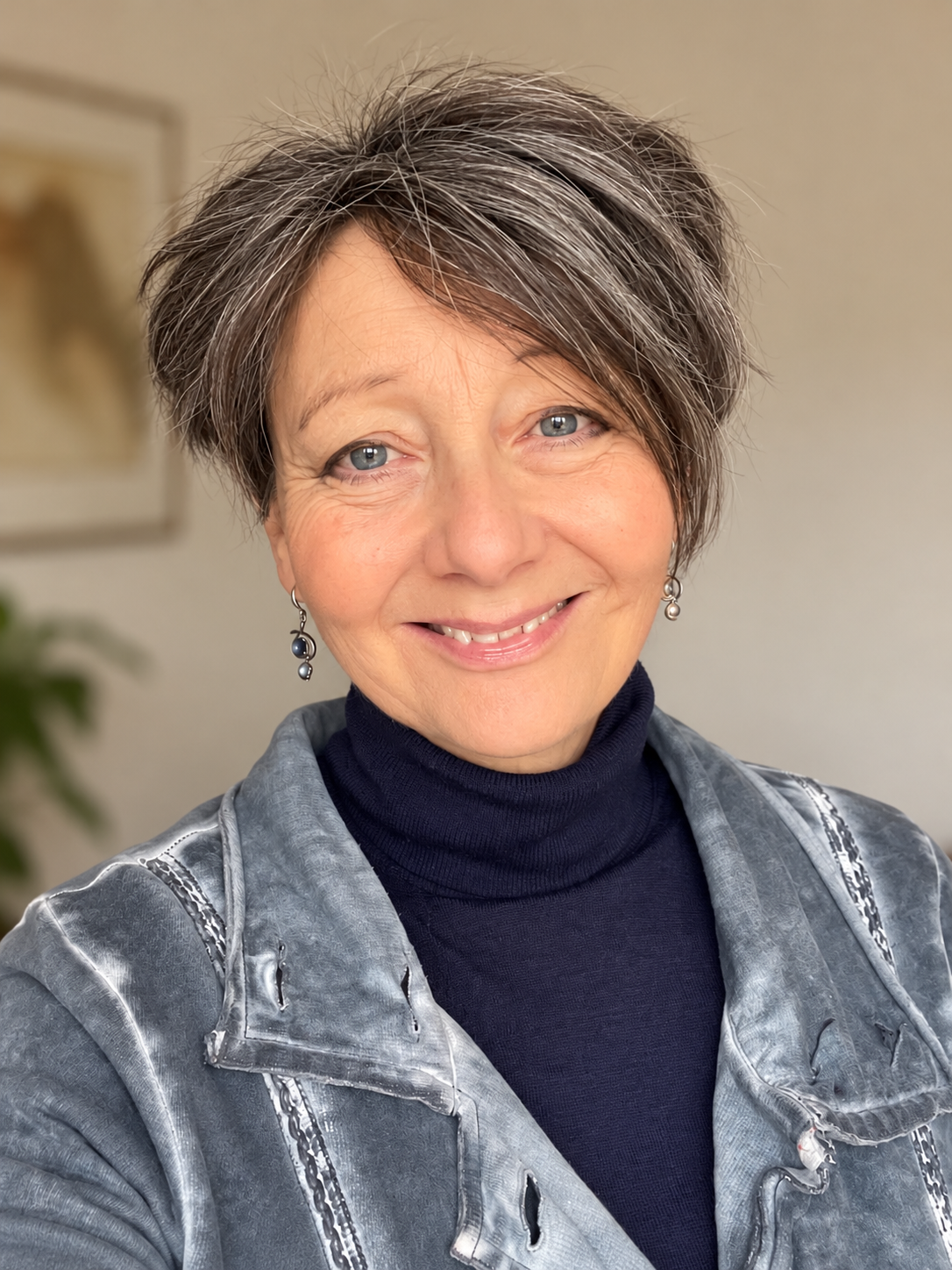
Carolyn Baynes
Carolyn Baynes is an Internal Family Systems (IFS) therapist based in Farnham, Surrey. Drawing on her experience in education, mindfulness and therapeutic practice, she offers compassionate support to parents, adults and young people, helping them understand their inner responses and find greater connection with themselves and others.