
Reflections on anxiety, youth unemployment and the importance of feeling safe enough to begin Today's announcement about the growing number of young people who are not in education, employment or training (NEET) has got me thinking. Nearly a million young people in the UK are currently in this position, and the government is exploring ways …

Reflections on anxiety, youth unemployment and the importance of feeling safe enough to begin
Today’s announcement about the growing number of young people who are not in education, employment or training (NEET) has got me thinking.
Nearly a million young people in the UK are currently in this position, and the government is exploring ways to help more of them into work or training.
I have a part of me that KNOWS work is good for us.
Work can provide structure, purpose, friendships, a sense of competence and belonging. It can help us feel that we have something valuable to contribute to the world.
And I can understand why there is such concern about young people missing out on these opportunities.
But I also have another part that remembers being 18.
Between the ages of 18 and 21, I experienced such intense anxiety that the prospect of working or undertaking training felt impossible.
Not difficult. Not something I was reluctant to do.
Impossible.
And I wonder how many of the young people we’re talking about today are experiencing something similar.
When the problem isn’t a lack of motivation
It’s tempting to imagine that a young person who isn’t working or studying simply needs more encouragement, more opportunities or perhaps a firmer push in the right direction.
And for some young people, practical help with qualifications, transport, applications or finding an employer willing to give them a chance may be exactly what’s needed.
But what about those for whom the very thought of walking into an unfamiliar workplace, meeting new people or being assessed by someone feels terrifying?
From an Internal Family Systems (IFS) perspective, I wonder whether we might understand some of these young people as having protective parts that are working extraordinarily hard to keep them safe.
Perhaps a part is terrified of being judged or rejected.
Perhaps another has learnt from painful experiences at school that being around other people is dangerous.
Perhaps there are parts carrying shame, hopelessness or the belief that they will never be good enough.
And perhaps the part that refuses to leave the bedroom, attend an interview or sign up for a course is desperately trying to protect them from being overwhelmed.
Of course, not every young person who is out of work is struggling with anxiety. There are many different reasons why someone might not be in education, employment or training.
But for those who are frightened, I wonder whether pressure to become productive can sometimes add another layer of fear and shame.
We also need to look at the world we’re asking young people to enter
I don’t think we can understand this situation by looking only at the young person.
Many have grown up through extraordinary disruption.
The COVID pandemic interrupted education, friendships, opportunities for independence and some of the ordinary experiences through which young people gradually develop confidence.
We are also asking them to enter a labour market that can be difficult even for experienced adults.
Employers are facing financial pressures, and some are responding by reducing recruitment or looking towards automation and artificial intelligence.
Changes in employment costs and the wider economy may make businesses more cautious about taking on inexperienced young people.
These are not difficulties that can be solved simply by encouraging a young person to try harder.
And I wonder whether there is a danger of making young people feel responsible for circumstances over which they have very little control.
If we’re going to help them find their way into employment, surely we also need to create genuine opportunities for them to enter.
My first step wasn’t a job
When I think back to my own experience, what helped me begin to move forward wasn’t being told that I needed to get a job.
Between the ages of 18 and 21, I experienced such intense anxiety that working or undertaking training felt impossible.
And I remember feeling SO alone.
Everyone I’d been at school with seemed to be flying into their adult lives. My three brothers were doing the same. They were studying, working, making friends and finding their way in the world.
And there I was, feeling as though life was passing me by.
I felt such a failure.
It wasn’t that I didn’t want a life like theirs. I desperately wanted to be able to do the things that seemed to come so naturally to everyone else.
I did try to join groups. I remember going along to a walking group, thinking perhaps this would be a way of meeting people and getting out into the world.
But being surrounded by young people who seemed so confident and competent was awful. I was reminded of everything I felt I couldn’t do.
What helped were groups specifically for people experiencing mental health difficulties.
One was a music group.
I remember how the music itself provided a kind of safety. I could hide behind the guitar I was holding. I didn’t have to make conversation or try to appear confident. Instead, we sang a few songs and strummed a few chords together.
Someone would show me where to put my fingers, and I could become absorbed in learning something new.
And something rather wonderful happened. My curiosity and creativity began to take the lead.
There was such relief in that.
My anxiety hadn’t necessarily disappeared, but for a while it wasn’t the only thing happening in my system.
There was music, curiosity, creativity and the experience of being alongside other people without the pressure to be someone I wasn’t.
I also joined a Tai Chi group for people experiencing mental health difficulties, and that helped enormously too.
Looking back, I wonder whether these groups offered something that was missing elsewhere.
I wasn’t surrounded by people who appeared to be confidently getting on with their lives. I was among people who, in their own different ways, were struggling too.
Perhaps there was less pressure to hide my difficulties or explain why I wasn’t doing the things other people my age were doing.
And the activities themselves gave us something to share.
I didn’t have to make conversation or prove that I was capable. I could simply participate in whatever way was possible for me.
From an Internal Family Systems perspective, I wonder whether my frightened parts could relax a little because they weren’t being asked to do something that felt impossible.
And when they had a little more space, other parts of me could begin to emerge.
My curiosity. My creativity. Perhaps even a little confidence.
These groups weren’t employment or formal training.
But they were a beginning.
And I wonder whether we sometimes underestimate just how important such beginnings can be.
Perhaps the first step towards participation isn’t always learning to tolerate what frightens us. Sometimes it’s discovering something we love enough to make participation possible: For one person that might be music. For another, animals, gardening, coding, cooking or making things.
What if we began with the anxiety?
The government’s review recognises the importance of mental health support and proposes ways of helping young people access it more quickly.
That seems an important step.
But I wonder whether we might also think differently about what support is for.
What if, instead of approaching a young person primarily with the question, How can we get you into work?, we began by asking:
What makes the thought of work so frightening?
What has happened that has made the world feel difficult or unsafe?
What might help you feel a little more able to participate?
And perhaps, most importantly:
What would feel like a manageable first step for you?
From an IFS perspective, I would be interested in helping young people become curious about the parts of themselves that are frightened.
Not trying to persuade those parts to disappear, or telling them that their fears are unreasonable.
But helping the young person develop a different relationship with their anxiety, so that the frightened parts might gradually discover that they don’t have to carry everything alone.
Of course, this is not something that can always be achieved quickly. Some young people will need specialist mental health care, practical support, financial security or much more time.
And we need to be careful that even the invitation to work with anxiety doesn’t become another demand to get better.
Could we offer more stepping stones?
I keep coming back to that music group.
What if we invested in more opportunities for young people to take part in activities that offered connection, enjoyment and a sense of belonging, without immediately measuring their success in terms of employment?
Music groups, community gardens, art workshops, volunteering, gentle physical activities, or small supported groups organised around a shared interest.
Not as substitutes for appropriate treatment, education or employment opportunities, but as possible stepping stones towards them.
For some young people, a supported work placement might be exactly right. For others, getting out of the house and attending a group once a week could be an enormous achievement.
And perhaps the young person themselves needs to have a real say in what that first step looks like.
I wonder whether the most helpful measure of progress isn’t always how quickly someone moves into work, but whether they are beginning to feel more connected, more hopeful and more able to participate in life.
That might eventually make employment possible.
But it would have value even if it didn’t.
Making room for hope
I don’t want to dismiss the importance of work.
I know how much meaning, confidence and connection it can bring.
And I can understand the wish to ensure that young people aren’t left isolated, without opportunities or hope for their future.
But I also remember what it was like to be so frightened that the expectations of ordinary adult life felt impossible.
I wonder whether we sometimes become so focused on the destination — employment, training, independence — that we overlook what a young person might need before they can even begin the journey.
For me, it began with music.
With being alongside other people.
With discovering, perhaps, that I could belong somewhere without having to be different.
And I wonder whether, for some of the young people we’re so worried about today, the first step might be something equally simple.
Not a demand to become productive.
But an invitation to begin feeling safe enough to participate in life again.
If this resonates with you or someone you know and you would like to explore how IFS can help please do reach out.
Book a Consultation
It’s easy and free!
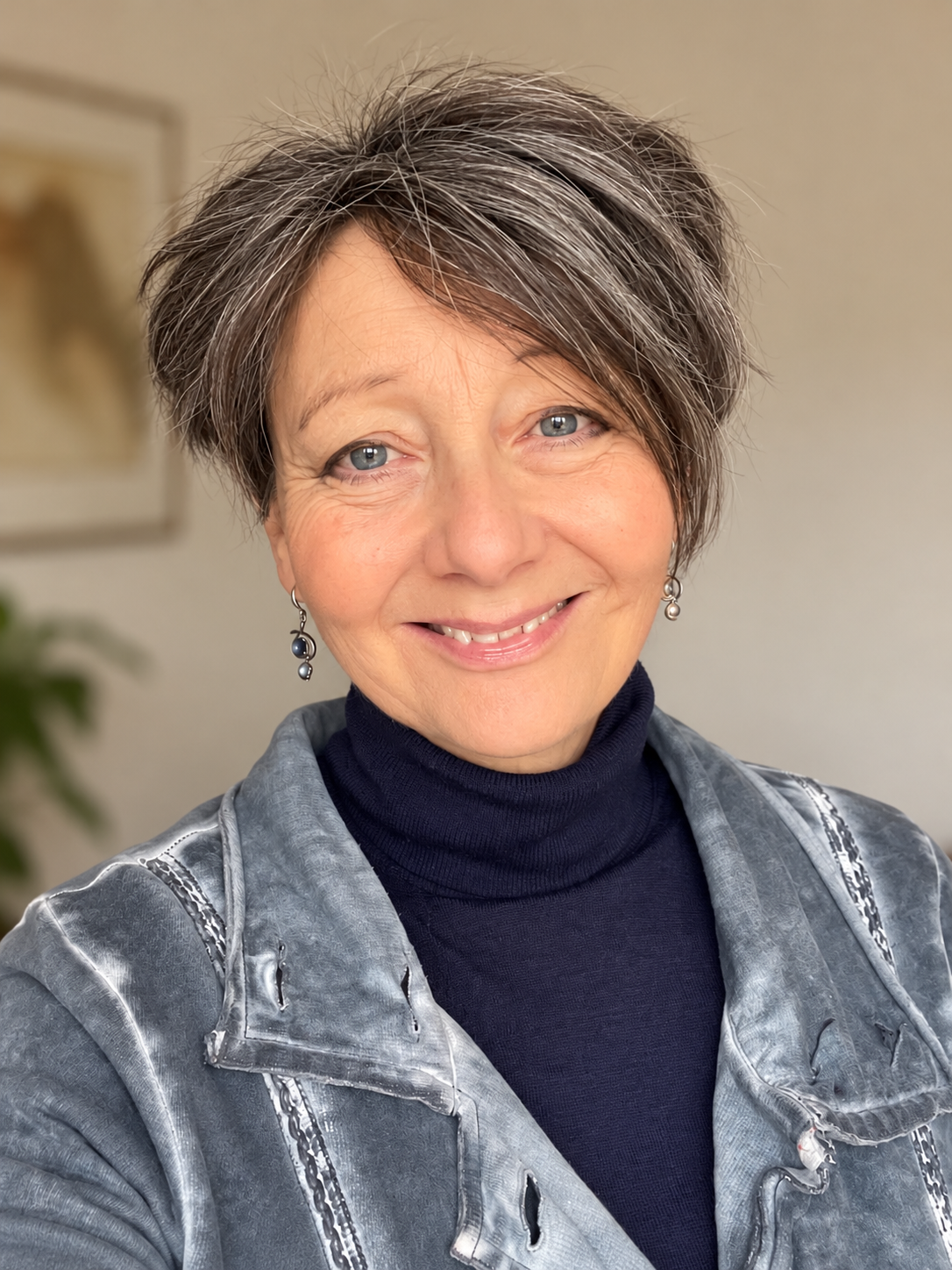
Carolyn Baynes
Carolyn Baynes is an Internal Family Systems (IFS) therapist based in Farnham, Surrey. Drawing on her experience in education, mindfulness and therapeutic practice, she offers compassionate support to parents, adults and young people, helping them understand their inner responses and find greater connection with themselves and others.